A Reading Nook or a Window Seat? Choosing a Place to Pause
Choose a reading nook or window seat by matching light, comfort and daily use to the way you actually pause at home, not the room’s best photograph.
Should you make a reading nook or a window seat? The answer depends less on the shape of the room than on what you do when you stop there: read for a while, watch the street, or take a quiet minute between tasks. Light, comfort and daily use each point towards a different choice.
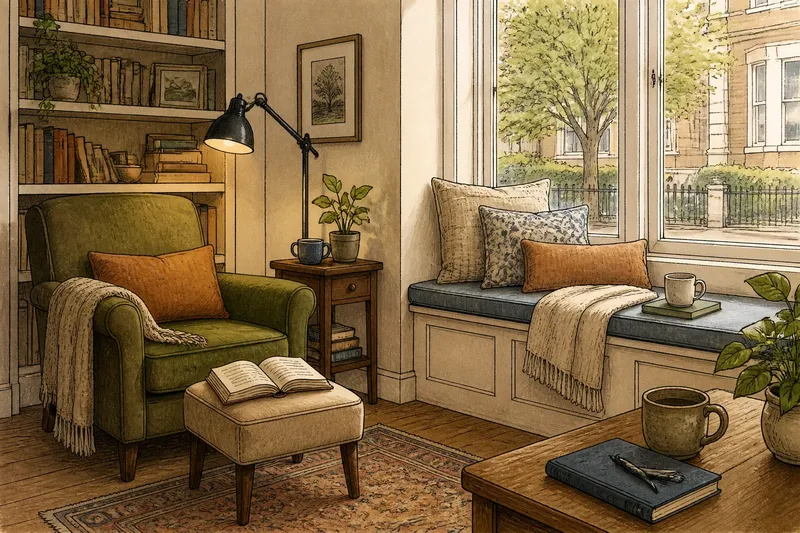
A nook is a defined corner, usually arranged around a chair, lamp and small surface. A window seat makes the window itself the centre of the pause. Neither needs a grand renovation; both need to suit the habits already present in the room.
Start with the light
If you read mostly in daylight and enjoy looking outside between pages, a window seat may suit you. It brings the changing light and view into the pause, and can make an otherwise overlooked bay or wide sill feel occupied. Check where direct sun falls at the hours you are likely to sit: pleasant winter light and glare on a screen are not the same thing.
If your reading happens after work, on cloudy afternoons or in the evening, a nook may be easier to control. A floor lamp or adjustable reading lamp can put light on the page without depending on the weather or the direction of the window. Keep the lamp close enough to serve the chair, rather than choosing a corner because it looks inviting in daylight and discovering it becomes a cave at dusk.
Consider the view, too. A window facing a quiet garden or a tree may help a short pause feel distinct from the rest of the room. If the window looks straight onto a busy path, a nook turned towards a bookcase or wall may feel more settled. Curtains, blinds and the angle of the seat can soften the view, but there is no obligation to turn every window into a private observatory.
Match the comfort
Choose a nook if you want a proper chair with back support, arms and room to change position. A compact armchair can be paired with a footstool, cushion and side table; together, these make a small corner usable without asking the window to do any furniture’s job. This is often the better fit for longer reading sessions or for anyone who prefers a familiar seat with a firm back.
A window seat is appealing when you like a built-in ledge, a cushion and a view. Its comfort depends on details that are easy to miss in a photograph: the depth of the seat, the support behind your back, and whether your feet rest comfortably. A cushion can improve a hard surface, but it cannot make an awkward posture disappear. If the ledge is shallow, it may work better as a brief perch than as a place to finish a chapter.
Think about warmth and draughts before settling beside the glass. A seat that feels pleasant in one season may feel cold near the window in another, while a radiator beneath the sill can make some arrangements uncomfortable. The window’s construction and the heating layout matter; follow relevant product guidance and ask a suitable professional if a proposed alteration affects the building or its services.
Follow the daily habit
For frequent, short pauses, the window seat can be the natural choice. It offers a place to sit with a cup of tea, glance outside or wait while something finishes in the kitchen. If you often put down a book and look up, a view becomes part of the point rather than a distraction.
For a regular reading routine, a nook is usually easier to keep ready. A small basket can hold the current book and reading glasses; a side table can take a mug without crowding the seat. The arrangement gives reading a recognisable place, which can help distinguish it from sitting on the sofa with the television quietly negotiating for attention.
Storage should serve the habit, not become a reason to choose the seat. A window seat with a lift-up lid can conceal blankets or books, but frequent use means moving the cushion and opening the compartment. Open shelves beside a nook keep a few books within reach. Choose what you will actually use, not the storage that sounds most virtuous in a furniture description.
Choose by situation
- You read in the evening: Choose a nook with a well-placed reading lamp. Its light is available regardless of the window’s orientation or the season.
- You pause for a view: Choose a window seat if the outlook is pleasant and the seat supports a relaxed posture. The window is part of the activity, not just a backdrop.
- You want a place for longer sessions: Choose a nook if a supportive chair and room to shift position matter most. A window seat can still work, but only if its depth and back support suit you.
- You have a useful bay or broad sill: Consider a window seat if the space already invites sitting and does not interfere with opening the window or using nearby furniture.
- You need a flexible corner: Choose a nook if the room layout may change. A chair, lamp and table can be moved more readily than a built-in seat.
- You want a small place for a household pause: Choose a window seat if several people might perch there briefly. Choose a nook if the place is meant for one person’s quieter routine.
Say you have a spare corner beside a bookcase, while the nearest window faces a pavement where people pass close by. You read mostly after dinner and want somewhere to leave a book and tea. An armchair, adjustable lamp and narrow table would make the nook the more suitable choice; the observable difference is that the seat remains useful after daylight has gone and does not make the street view the centre of the pause.
Questions about seating?
Can a reading nook fit in a small room?
Yes, if the chair leaves a clear route through the room and the lamp and table do not crowd a doorway. A compact chair and wall-mounted or narrow lamp can define the corner without making it feel like a separate room.
Does a window seat need to be built in?
No. A freestanding bench or low seat placed near a window can give you the same view-led arrangement. Check that it is stable, leaves access to the window and suits the available space before making it the regular perch.
Which option is better for reading?
A supportive nook is often the more dependable choice for long reading, especially when you need controllable light. A window seat suits reading that comes with looking outside or taking frequent breaks, provided the seat itself is comfortable.
Can one place do both jobs?
It can, if a chair or bench sits near the window and has a nearby lamp and small surface. Treat the arrangement as a reading place with a view, rather than expecting a shallow sill to provide the support of a chair.
Keep the arrangement modest
Before buying furniture, sit in the proposed spot at the time you are most likely to use it. Notice the light on a page, the noise from the room and whether you can put down a drink without balancing it on a cushion. A folded blanket and an existing chair can help you judge the feel of a corner; there is no need to turn the trial into a furniture campaign.
Once you have chosen, add only what makes the pause easier to repeat: a lamp, a cushion that supports rather than merely decorates, or a place for the book you are reading. If the spot is rarely used, change the position or remove an obstacle before buying more. The right reading nook or window seat is the one that makes stopping feel ordinary enough to happen again.