A First Autumn Evening at Home: A Gentle Room-by-Room Reset
A first autumn evening at home can help you notice changing light, gather useful comforts and prepare one room for longer, quieter indoor hours.
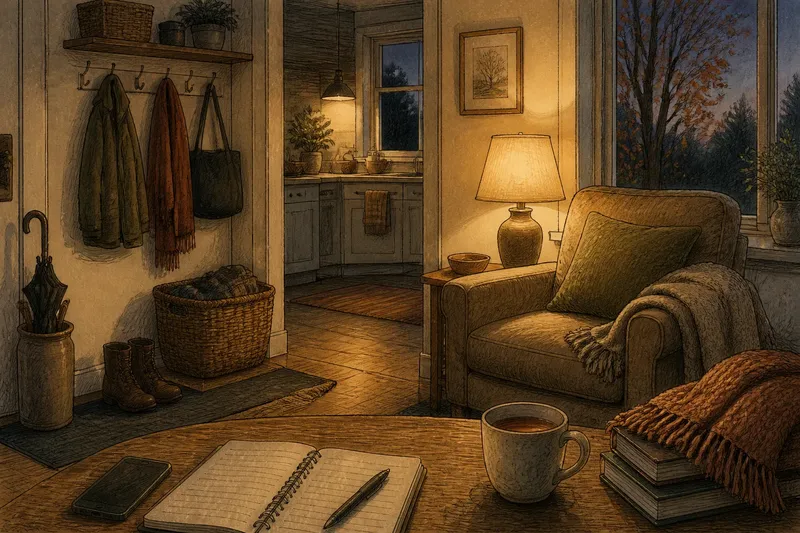
What should you change for a first autumn evening at home, without turning it into a weekend of moving furniture and buying cushions? Start by noticing what the evening asks of the rooms you already use. The useful change may be a lamp switched on earlier, a blanket brought within reach, or a clear place for damp shoes.
This is a small seasonal reset, spread over a week rather than squeezed into one ceremonial afternoon. Its purpose is not to make the whole house look like autumn. Choose one room to prepare for longer indoor hours, and let the rest of the house offer clues about what matters.
The first evening
On the first evening, leave the rooms as they are and pay attention to the light. Notice where the last daylight falls, which corners become hard to use, and when you reach for a lamp. You are gathering information, not grading the house.
Take a slow route through the rooms you use between late afternoon and bedtime. You might begin at the front door, pass through the kitchen and living room, then finish where you read, work or settle down. Keep the route ordinary: the point is to notice what you actually do, not to invent an ideal evening.
Make a few brief notes on paper or in your phone. Record practical details such as “hall light needed before dinner” or “living-room throw is in the airing cupboard”. Add one sensory detail if it helps: the floor feels chilly in socks, or the window catches the last pale light. Such notes make a better plan than a vague instruction to make things cosy.
Pay attention to friction. Is a lamp hidden behind a chair? Does the door open into a pile of bags? Do you cross the room to fetch a cardigan every evening? These are small inconveniences, but small inconveniences have an impressive capacity to become household customs.
The entry route
On the next day, look at the entrance you use most. As the weather turns, the doorway may have to accommodate a coat, shoes, umbrella or bag that were not in regular use through brighter months. The aim is to make their arrival easy without giving them permanent custody of the floor.
Choose a landing place for each item you expect to use. A row of hooks, a sturdy basket or a washable mat may already do the job; use what fits the space. If the entry is narrow, keep the route clear before adding a new storage item. A basket that blocks the door has merely given clutter a nicer address.
Check whether wet things have somewhere sensible to dry. A hook near a draught-free area can be more useful than hanging a damp coat over a chair. For an umbrella or muddy footwear, choose a surface that can take moisture and is easy to wipe. Follow product labels and the relevant local rules where they apply.
Now make one adjustment and use the entrance normally for a day. If bags still land in the same inconvenient place, move the landing spot closer to that habit rather than scolding the habit. Homes are not improved by issuing stern instructions to their inhabitants, particularly when those inhabitants are carrying groceries.
The light path
On a third evening, look at how you light the route between the room where you spend time and the place you go before bed. You do not need to rethink the house’s whole lighting scheme. Notice only where a dark patch makes an ordinary task awkward, or where overhead light feels harsher than the evening calls for.
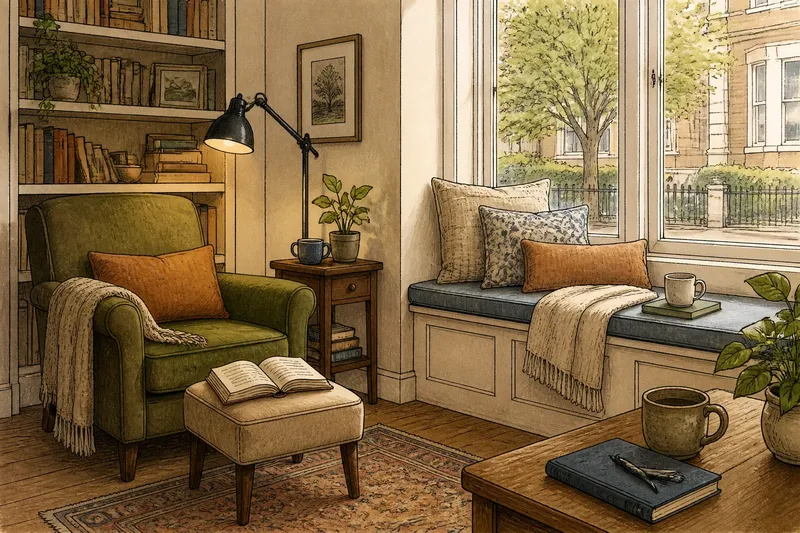
Try the lamps you already own in the room you may choose as the seasonal focus. A table lamp beside a sofa can make reading easier; a lamp near a hallway shelf may help with finding keys. If a cord crosses a walking route, do not leave it there. Choose another position or ask a qualified electrician about any work that involves fixed wiring.
Check the bulbs and controls before deciding that you need new equipment. A switch that is awkward to reach can matter more than the number of lamps. If you are considering a dimmer, smart bulb or replacement fitting, check compatibility and the manufacturer’s instructions first; electrical work beyond ordinary plug-in equipment belongs with a qualified professional.
For a simple observation, sit in the room at the time you normally stop doing practical tasks. Notice whether you can see what you are reading, whether the light reaches the chair you use, and whether glare lands on a screen. Make a note, then leave the rearranging for the room you choose, rather than adjusting every lamp on impulse.
Choosing one room
On the fourth day, compare your notes and choose one room for the main reset. Pick the room that carries the most evening activity or the one where the changing light has made a familiar task less comfortable. It need not be the largest room, the prettiest room or the one most likely to appear in a photograph.
A useful choice usually has a clear reason. Perhaps the living room is where people gather after dinner, or the kitchen has become the place for finishing a book while the kettle boils. Pick the room that supports the evening you already have. Do not choose a neglected spare room merely because it is available to be improved in theory.
Set a boundary before you begin. The room may need a lamp moved, a warm layer brought out and one surface cleared; it probably does not need a new colour scheme. Keep other rooms on observation duty. That limit is what makes this a seasonal reset rather than a renovation with modest ambitions and an expanding list.
Say you notice that, on several evenings, you carry a book from the kitchen to a dim living-room corner, then return for a cardigan. You could move a spare lamp to the corner, put a washable throw over the nearby chair and place the book on a shelf within reach. The expected result is visible in ordinary use: less searching and a more comfortable place to sit, without changing the room’s layout.
What should you prepare?
What if the room already feels comfortable?
Leave it alone unless your observations point to a specific snag. A seasonal reset is not an obligation to manufacture a problem; you can simply bring a useful item back into circulation and stop there.
How do you choose what to bring out?
Choose items that answer a real need in the room, such as a washable throw, a cushion with proper back support or a small tray for tea. Check that textiles are clean and that storage has not left them musty, then put them where they will be used rather than displayed at a distance.
Should you rearrange furniture?
Only if the present arrangement obstructs a route or leaves the room’s usual activity poorly placed. Try moving a lightweight chair or side table first, then use the room for an evening before deciding whether the change helps.
What if several rooms need attention?
Keep the main reset to the room you chose and make a short note of the other needs for later. You can deal with a practical obstruction promptly, but avoid beginning a second decorative project just because you noticed it.
The room reset
On the fifth day, prepare the chosen room in one short, deliberate session. Begin with what is already there: return stray items to their proper places, clear the surface you use most and remove anything that makes the room harder to move through. This is not a demand to empty every cupboard. The cupboard can continue to live its private life.
Bring in the comfort items you identified. A blanket should be easy to reach and easy to wash; a cushion should support the way you sit rather than simply occupying a chair. If you use a candle, keep it on a stable, heat-resistant surface, away from curtains and anything likely to be knocked over, and do not leave it unattended. An unlit candle can also be an entirely respectable object.
Then put the lamp where it supports the room’s actual use. Check the route to the door and the path between seats, especially if visitors or children use the room. Keep cords out of walking routes, and make sure furniture does not block a radiator or another fixture that needs clear space.
Finish by sitting in the room at your usual evening hour. Try the light, reach for the blanket and use the surface you cleared. If something is awkward, make one small adjustment. If the room works, leave it; the best reset may be too quiet to photograph.
The week after
Use the next two evenings as a gentle review. Do you switch on the lamp when you need it, or does the old habit send you across the room? Does the blanket stay in reach, or does it migrate to a chair nobody uses? These are useful signs of whether the arrangement fits your routines.
If an item is never used, return it to its usual storage place. If you repeatedly fetch something, move it closer to where the need arises. Keep the adjustment modest: the point is to make a room easier to inhabit, not to hold a review meeting with the cushions.
On the final evening of the week, take another look at the light and the entry route. You may notice that the first change was enough, or that one practical detail still needs attention. Keep a note of anything that can wait for a later seasonal change rather than turning the end of this week into a fresh round of work.
A first autumn evening at home is most useful when it leaves you with a room that serves the evenings you actually have. Keep the note with the household things you already consult, such as a calendar or shopping list, and revisit it when the days shift again. The season can change by degrees; the house is allowed to keep pace in much the same way.